Showing posts with label eco. Show all posts

Monday, 16 September 2019

Fashion Movements - Sustainablity

Hello everyone, today I wanted to talk to you a little bit about how fashion has evolved to become what it is known as today. The environment has recently been a buzzword, particularly within fashion and therefore I thought it would be interesting to see how the fashion industry has arrived at where it is now. There have been multiple movements from 1990 onwards and I think that learning about the past helps to ensure a better future for everyone. I hope you all enjoy...

1990-2000: A Quickening

Due to the 1992 Rio Earth Summit and the formation of the UNFCCC (the United Nations Framework Convention on Climate Change) there was an urgency to stabilise greenhouse gases, especially during the 1990s, in order to prevent the climate from becoming endangered. However, at the same time the fashion industry was growing due to economic, political and technological changes. China's export-led strategy initiated by Deng Xiaoping (1904-1997) opened the country up to foreign investment. A large impact on globalisation was the development of shipping containers. 94% of countries had ports to receive large shipments by the late 1980s. By 2015 the cost to ship cargo had dropped by 90% in 60 years - a simple sweater could travel 3,000 miles by sea just for a few pence. 

In 1989 the New York Times used the words, 'Fast Fashion' to describe ZARA's 'Quick Response' model, which initially was created for car manufacturing in Japan. The model was adopted to improve efficiencies in fashion manufacturing and supply chains. The Internet accelerated the speed of fashion too. By the end of the millennium a perfect storm was brewing for the fashion industry to become a huge contributor to the environmental crisis.

Katharine Hamnett highlighted in her designs the stark facts about the environmental degradation caused by fashion, but she also showed the human welfare aspects too. As there were 270,000 farmer suicides between 1995 and 2013, caused by desperation due to spiralling repayment costs of pesticides and seeds sold on credit - the collection Hamnett created only used organic cotton. This designer therefore set an early example for others to follow.
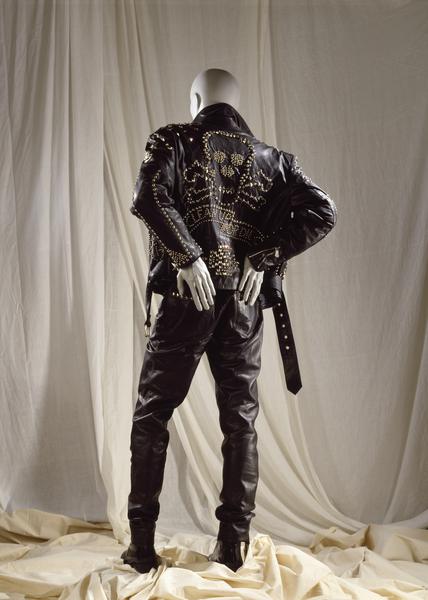
Image result for katharine hamnett clean up or die

Katharine Hamnett's Clean up or Die Jacket

2000-2010: Momentum 

ASOS and Net-a-Porter both opened their online doors in 2000, a defining point in the rise of online shopping. However Marks and Spencer, one of UK's most well known retailers, set out 100 bold, measurable commitments in 2007, in its 'Plan A' initiative. Named because CEO at the time Stuart Rose said, 'there is no Plan B' when it comes to the environment. Aims included: limiting the impact of climate change by using renewable energy and efficient production processes; extending a commitment to fair-trade cotton; supporting farmers and encouraging energy conservation in the care of clothes by customers through the introduction of 'wash at 30 degrees' labels. Post-purchase responsibility shows customers have a critical role in achieving sustainable habits. It all starts with what we buy as well as how we look after and discard clothes.

Whilst the pace sped up to address the urgent need for a more sustainable approach to fashion, ever-cheaper fashion was accelerating, a vivid example of fast fashion was witnessed when Primark launched in 2007 - shoppers were seen trampling over each other for bargains, an iconic image of crazy consumption.


Customers fall over each other in order to buy bargains

2010 Onwards: What has really changed?

By 2010, the call for the fashion industry to address sustainability was rising in volume. In 2011 the Greenpeace 'Detox Campaign' challenged many of the world's most popular fashion brands to eliminate the release of all hazardous chemicals from their production processes. Detoxing fashion continues to be problematic as many brands struggle due to selling outsourced products.

An example of an initiative that has been successful is Fashion Revolution's, 'Who made my clothes?'. This was created in response to the terrible and fatal Rana Plaza collapse back in 2013. Work related deaths of garment workers in developing countries continues, so it is imperative that Fashion Revolution's simple question is now a worldwide campaign. Brands are under much more scrutiny than they have ever been before. Transparency and traceability both have grown in importance for all brands and in the words of Joanna Macy, an environmental activist, this is 'a time of great turning', from a self destructing society to a life-sustaining society. 


Extinction Rebellion 'Die-in' at LFW

Even though there is valuable work going on to demand a better fashion world, the UK’s Fashion Industry is worth £26 billion and provides 800,000 jobs to the economy, making it the UK’s largest creative industry. Completely eradicating fashion from the world isn't a sensible solution, fashion just needs to reinvent itself and become more circular, fairer, sustainable and long-term. If you are interested in fashion or have just been on social media in the past few days you will know that London Fashion Week is in full swing. A few years back I would have wanted nothing more than to be with the people in the front row, however now I would much rather try to change the industry to become more caring and more curious about clothes. After I heard people had protested outside LFW I thought 'WOW this could be change' but I don't know if stopping fashion altogether is the best option, maybe it is, maybe it isn't. Fashion is a huge industry and employes a lot of people who depend on it for their livelihoods. If you want to read more about the 'die-in' that Extinction Rebellion held outside London Fashion Week I recommend this article

I think it will take a lot more time for real change to permeate the fashion industry, but changes have started, they just need to increase and continue.


Hope you learnt something new and enjoyed this post! Have an amazing week!

All my love 
Ames 
xxx

Saturday, 7 September 2019

DIY Cleaning Products (Money saving tips for Students)

Who wants to be spending god knows how much money on cleaning products every month when you are living in a student flat or house? No one, so here are a few ways you can save money by making your own cleaning products. One of the best things about making your own products is that once you have the raw ingredients you will be able to make the products again and again. This therefore saves you so much time and money. I have trialled these products over the summer and I am definitely going to be using them during my next year at uni!

Product No.1 - Multi-Purpose Cleaner

Ingredients 
1 litre of hot water
1 tbsp baking soda
32ml of white vinegar
½ a lemon


Method 
  1. In a small bucket combine vinegar, baking soda and hot water.
  2. Squeeze in the juice from half a lemon, then drop the rind in as well to infuse the cleaner.
  3. Stir well to dissolve the baking soda and allow to cool. Remove the lemon rind.
  4. Transfer into a spray bottle or squeeze bottle and label clearly. 
  5. Then use your cleaner in order to clean surfaces in your kitchen, bathroom or bedroom.
Product No.2Window Cleaner 

Ingredients
300ml of warm water
1 tbsp of corn flour
32ml of white vinegar


Method
  1. Combine everything in a spray bottle, and shake well. 
  2. Shake well before using, too, as the corn flour might settle at the bottom and not work as well. 
Product No.3 - Toilet detergent 


Ingredients

10 drops of tea tree essential oil
10 drops of lavender essential oil
113g of baking soda
113ml of white vinegar


Method 
  1. Combine baking soda and essential oils in a mixing bowl. 
  2. When ready to clean toilet bowl add vinegar and pour mixture into the toilet. 
  3. Then scrub with toilet brush.
Note: This is a single use recipe. There is no method of storage due to the fizzing action.


Hope you all found this helpful! Have a fabulous weekend 

All my love

Ames xx


Saturday, 10 August 2019

Capsule Wardrobe 101

Hey there you lovely bunch! Today I wanted to share with you how I have gone about creating my capsule wardrobe. But before I do, if you are sat there wondering what the heck a capsule wardrobe is, well I can tell you! A 'capsule wardrobe' is a term first used by Susie Faux, the owner of a London boutique called "Wardrobe" in the 1970s. A capsule wardrobe is a collection of a few essential items of clothing such as trousers, skirts, and coats, that won't go out of fashion/you don't fall out of love with. 


“The basic idea is simple: by building a capsule wardrobe you will buy fewer clothes of a higher quality that you will wear more often. You will look and feel confident and successful because the quality will show and because you know that the overall look works.” ~ Susie Faux 

Faux has defined her idea of the core pieces: a jacket, a skirt, trousers, a blouse, a sweater, tights, shoes, a coat, a dress, a bag, and a belt. However, she also mentioned that it will depend on person to person. By creating a capsule wardrobe you will be able to get dressed with ease as well as save time for the things that matter most. Say goodbye to those 'I have nothing to wear' dilemmas we all know too well. 

If you want to a) find your own style/are fed up with what you are wearing, b) be more sustainable or c) actually wear all your clothes follow these 5 simple steps...

1. You don't have to have an exact number, but aiming for 50 or fewer pieces of clothing will be a good start...To begin with if you are a bit of a shopaholic try to be strict on yourself and don't try to fill up your wardrobe as soon as you have emptied it. But give yourself the freedom to evolve over time as you learn what works and what doesn't for you.

2. Begin with a simple clear-out...Limiting your wardrobe to a specific number can help, yet make sure that what you don't want anymore is either donated to charities or used as scraps for cleaning or other purposes - remember that simply throwing away your clothes is not only bad for the environment but a waste of money.


3. Trial the process if you're a bit scared to commit fully...Pick 10 items of clothing that you are going to wear for the week and don't wear anything other than those items. See if you'll be able to do it!

4. Be honest about your lifestyle and what you need from a wardrobe...Don't end up with 'fantasy-life' clothes instead of 'real-life clothes'. 

5. Don't worry about making it perfect...Accept that you won't have the perfect 'Instagramable' wardrobe, but you will have one that is unique to you and makes you feel good inside. Who wants to be perfect anyway, that would be boring!


Hope you guys liked this post, let me know if any of you make a capsule wardrobe! All my love,

Ames xxx

Saturday, 27 July 2019

2019 Time to Sustain

Hey there you lovely people!

Today I wanted to start writing again and update you on what I’ve been up too. I've just completed my first year at university studying Fashion Technology and it has been a whirlwind. I LOVE my course (I think it was actually made for me!) as I have had the chance to decide what I want to study, whether that's a module on Ecology or 20th Century Fashion. Throughout first year, I have been conscious of the impacts humans are having on the environment, in particular the damaging format of fast fashion and over consumption. I have learnt a lot and have started to live more sustainably as well as shop ethically or not at all (as a 'make do and mend' mindset is bloody fabulous when it comes to being sustainable). In this blog post I wanted to share with you a few of my simple sustainable tips, because being conscious of our impact on the planet doesn't have to be expensive or hard.


Only buy what you need (or make do with what you have) - when it comes to shopping online or in-store many of us are guilty of buying a brand new outfit for an upcoming event or night out. But it just takes a bit of thinking and creativity to use what you already have by either purchasing some basic pieces for your wardrobe or re purposing. For example, if you have a pair of jeans you love but don't know what top to wear with them, just use a pretty headscarf and tie twice at the front or back for two different styles (if you don't already have a headscarf ask your family first as most grandparents would have some but if not charity shops are your best bet)

Put reusable bags in every bag you own - this saves using plastic bags (and if you still have some, Morrisons and other supermarkets have collection bins where you can deposit your old plastic bags if you no longer want to use them rather than disposing of them in the general waste) and ensures you are never without one if you have to pick something up unexpectedly. 

Make your own cotton pads - disposable cotton pads aren't great for the environment as production requires significant amounts of water and energy so using old T-shirts or cut off fabric from up-cycled tops/bottoms you can make reusable pads that can be washed and used over and over again without having to buy or use new fabric, which tends to be expensive. 

Reduce how much you wash your clothes - research has shown that microfibres and microplastics are in our oceans, further research will highlight the impact these contaminants will have on our planet. Therefore reducing how much you wash your clothes, in advance, will help to avoid an unnecessary amount of mircofibres entering our oceans and being ingested by very important crustaceans and sea plankton. (For more information visit - BBC NEWS)

Use Tupperware or old jars - many households acumulate many boxes and containers over time, so instead of buying cling film/tin foil stick to reusable containers. By doing this you reduce on waste (air tight containers keep leftovers from going off) and once redundent containers like jam jars and pasta sauce jars are re purposed.

I hope you found reading this post useful and if you did let me know in the comments! My blog is going to start becoming more centred around an ethical lifestyle, as well as information on fast fashion and the future of fashion as there are both positives and negatives when it comes to the fashion industry (it provides millions of jobs yet it is a very very polluting industry - I will talk more about this in a future post!)

Have a lovely weekend lots of love 

Ames ♥